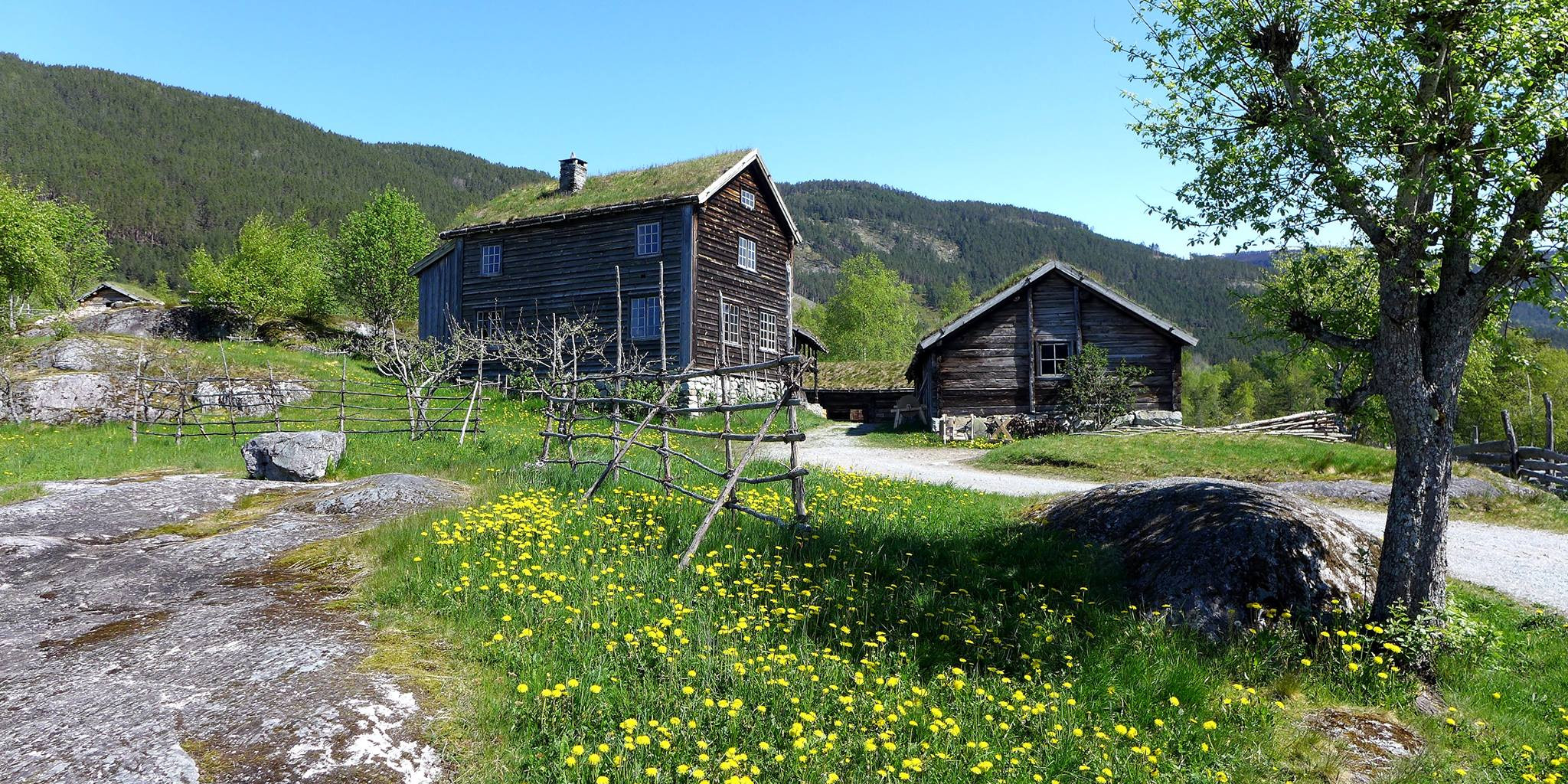
The Heiberg Collections – Sogn Folk Museum comprises 51 historic buildings, of which 46 are erected on site and five are in storage. The buildings date from the 16th century to the 1980s. The first building to enter the museum’s collection was Underdalsstova, acquired in 1903.
When the museum was located at Amla, the buildings were arranged in rows, displayed much like an exhibition. In connection with the relocation of the museum to Vestreim in the 1970s, a new placement plan for the buildings was developed by architect Arne Berg. The farm buildings were grouped into courtyards, forming Indre Sogn Farmstead and Midtre Sogn Farmstead. At present, Ytre Sogn Farmstead is under construction, with the building Hemrebui currently being erected.
In addition to the farmsteads and agricultural buildings, the museum includes a tenant smallholding by the shore (Henjasanden), as well as residences representing the upper social classes, such as Kvitevollstova and the vicarage from Vik. From the 1980s, the museum began developing a 20th-century section, and today this includes houses dating from 1939, 1964, and 1987.
Within the museum grounds there are also a mill, a grain-drying house (vetahus), a school building (from Helgheim Folk High School), and at the Fjord Museum a tavern building from Gulen.
Outside the museum area at Vestreim, the museum owns a sawmill at Tingastad, a smallholding at Eide, and a mill and a villa in Sogndalsfjøra.
The museum has five buildings in storage: Fossenstova, a 1970s cabin, Goroselet, and a boathouse. In addition, the museum owns a dairy, but due to its poor condition there are no plans to re-erect it.

