Astruptunet Astruptunet
Europa Nostra logo med påskrift
European heritage award to Astruptunet

European cultural heritage organisation Europa Nostra has selected Astruptunet’s restored farmgarden as 2026 award winner in the Conservation and Adaptive Reuse category.

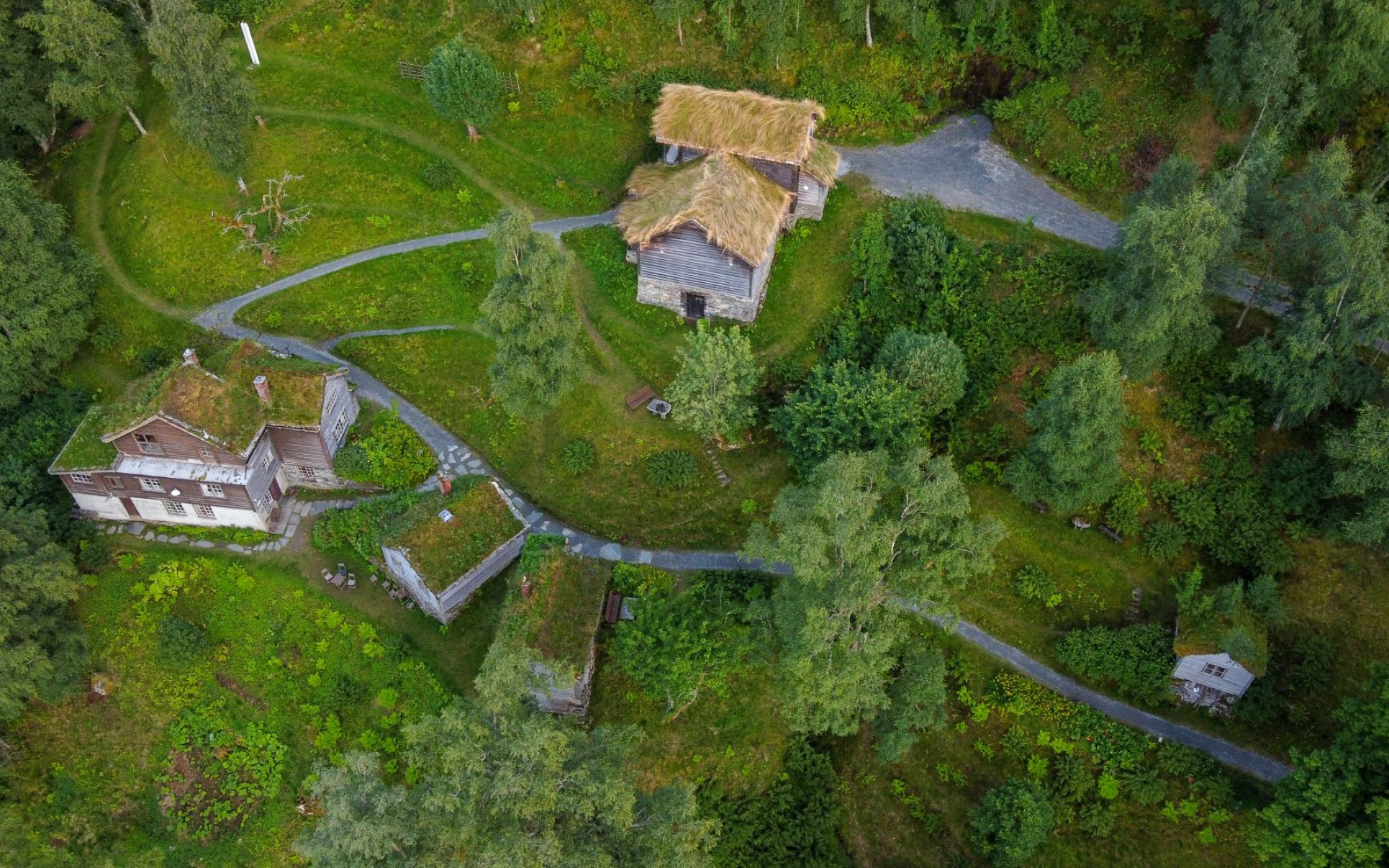
Since 2018, extensive work has been underway to recreate Astruptunet – the diverse artist home of Nikolai Astrup. When Her Majesty Queen Sonja reopened the farmstead to the public in 2024, Astrup’s cultivation terraces, orchard, vegetable beds and flower splendour had all been recreated, and the buildings, paths and roads had been restored to the time when he himself lived there in the 1920s. Now this work, especially the garden, is earning European recognition at the highest professional level.

Two women plants rhubarb on a hill, with audience looking.
Her Majesty Queen Sonja and Ingeborg Mellgren-Mathiesen planting rhubarb at the reopning.

– This is a great acknowledgement of Astruptunet’s significance as cultural heritage. The work done here has enabled us to offer the visiting public even greater diversity: both art, architectural history and a farmgarden that one can experience, harvest from and offer tastes of, says museum director Solveig Berg Lofnes at Astruptunet.

The garden as cultural heritage

The Europa Nostra jury justifies the award, among other things, by the fact that the restored farmgarden shows how central it was to the artist’s life and work. The work that has been done highlights the importance of gardens as cultural heritage and bearers of tradition, rather than mere decorative spaces. The restoration work reinforces the jury’s view that historic gardens are a distinct and vulnerable heritage category.

Rubarb and a birch tree in front of old building.
Astruptunet during midsummer. Rhubarb was an important crop for Nikolai Astrup, both as food and in his art.

– My project colleagues and I accept this award with much gratitude. The task we undertook has been acknowledged by a major European cultural heritage institution. It is an honour and a tremendous recognition to be a member of the Europa Nostra family, says Ingeborg Mellgren-Mathiesen of Arkadia Landskap, who supervised work on the garden.

The garden as part of the art

She believes that Astruptunet is not only an important and unusual farmgarden, with characteristic green cultivation terraces and peat structures. The facility is also one of Norway’s most important examples of a garden created by an artist, which later became part of his artistic work and inspiration. She feels that the place is strongly influenced by Nikolai Astrup’s own visions and tradition-bound Jølster legacy, including his far-sighted thoughts on environmental protection.

This is

Europa Nostra

Europa Nostra is a collection of European organisations that promote cultural heritage, with members from over 40 countries. Founded in 1963, the organisation is the most important and comprehensive cultural heritage network in Europe, with links to the EU, the Council of Europe, UNESCO and other international bodies. The organisation works to strengthen cultural heritage work and save endangered cultural heritage across the continent. The European Heritage Awards are awarded annually.

Background for the price

The Awards’ Jury commented: “This restored garden landscape clearly shows how central it was to the artist’s life and work. The project highlights the importance of gardens as cultural documents rather than decorative spaces and strengthens recognition of historic gardens as a distinct and vulnerable heritage category.”

Astruptunet is the former estate of the Norwegian painter Nikolai Astrup, located on a steep hillside above Lake Jølster in western Norway. Astrup acquired the small farm in 1912 and gradually transformed it into a terraced garden landscape. Between 1912 and his death in 1928, he developed orchards, vegetable plots and turf walls. The garden supplied food for his family and appears in many of his paintings and prints. The estate was conceived as a Gesamtkunstwerk, in which cultivated landscape, architecture and artistic vision formed a unified whole.

Over time much of the original planting disappeared. Some fruit trees were felled, berry bushes withered and cultivated areas were overgrown. The buildings remained standing, but the property had been uninhabited for decades and the garden structure had largely deteriorated.

A horticultural research project carried out between 2015 and 2018 formed the basis for the restoration. Archival sources, such as letters, plant lists, historical photographs and artworks, were examined alongside archaeological and botanical surveys. Interviews with family members and local residents provided additional information. The restoration period selected was 1912–1928, with consideration also given to the years during which Astrup’s widow maintained the property. An international scientific committee provided expertise and oversight.

The reconstruction re-established the structure of the farm garden based on this extensive research. Historic plant varieties were reintroduced, including grafts from surviving fruit trees in the region. National and regional gene banks supplied additional plant material. Turf walls, gravel paths and wooden elements were rebuilt using local techniques. Traditional cultivation methods described in Astrup’s writings were applied.

The eight timber buildings on the property were restored by local traditional craftsmen and heritage architects, following a condition survey prepared by the Norwegian Institute of Heritage Research. Modern materials were kept to a minimum and interventions were reversible wherever possible. The gallery and the new café in the basement of the main building are fully accessible for wheelchair users.

The project was completed between 2020 and 2024. Funding was provided primarily by the Savings Bank Foundation DNB, with additional support from the Municipality of Sunnfjord, which owns the land and buildings at the site. Museums of Sogn og Fjordane operates Astruptunet on behalf of the municipality.

The site is now open to the public throughout the year. From the start, local volunteers, schools and community groups have been actively involved in bringing Astrup’s garden back to life, contributing to planting, maintenance and public activities, strengthening the link between heritage conservation and community participation.

See and do at Astruptunet

More